Home / Services / Masonry Repair & Restoration

Repair & Restoration

Masonry Repair & Restoration in Modesto & the Central Valley

Expert tuckpointing, brick replacement, crack repair, chimney restoration, and full structural masonry repair. We bring aging masonry back to life - and make it last another 30 years.

Get a Free Estimate

Masonry Repair Specialist in Modesto, Ceres & the Central Valley

Masonry is one of the most durable building materials ever used - but it is not indestructible. Mortar joints deteriorate over time. Bricks crack and spall. Chimneys crumble. Retaining walls lean. Block walls develop horizontal cracks from soil movement. These problems do not get better on their own - they accelerate.

Warrens Masonry has over 35 years of masonry repair and restoration experience across Modesto, Ceres, Turlock, Stockton, Oakdale, and throughout the area. Owner Ronald Warren personally assesses every repair job to diagnose the root cause and recommend the right fix - not just a cosmetic patch, but a lasting structural repair.

The the region's climate presents specific masonry challenges. UV exposure degrades mortar faster than in coastal climates. Our hot summers and cooler winters create thermal cycling that stresses masonry joints. The region's clay soils expand and contract seasonally, exerting pressure on foundations and retaining walls. Our 35 years of regional experience means we understand these forces and know how to repair masonry that will hold up against them.

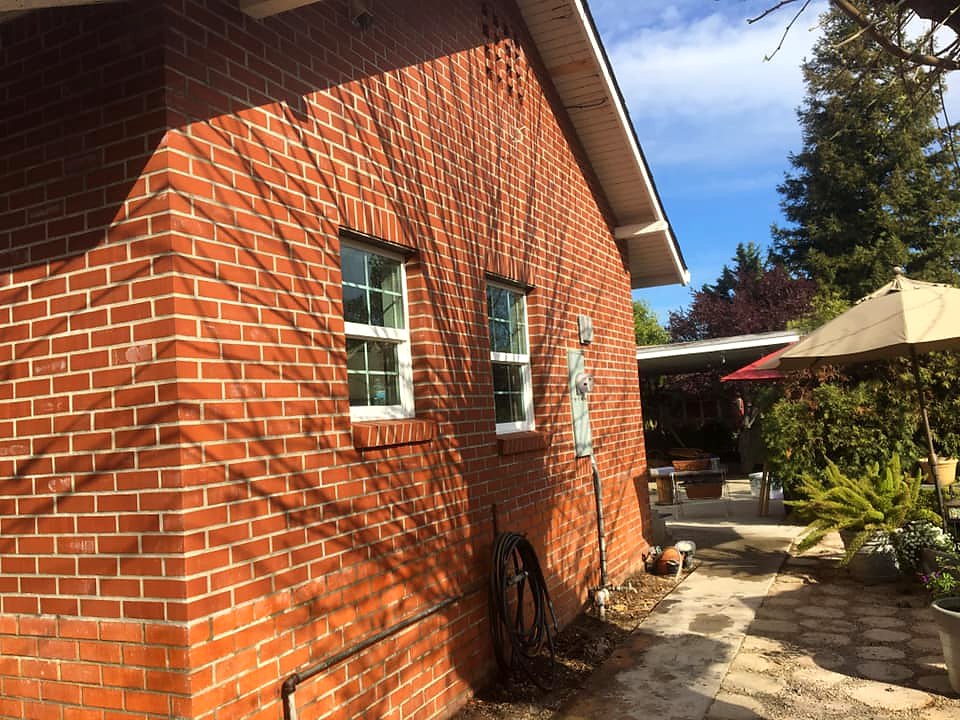
Classic red brick home exterior restoration by Warrens Masonry

Our Masonry Repair Services

  • Tuckpointing and mortar repointing to match existing color and profile
  • Brick replacement and color matching for seamless repairs
  • Crack repair in brick, stone, and block walls
  • Chimney repair and rebuilds - repointing, crown, cap, and damper work
  • Leaning and bowing wall stabilization
  • Foundation masonry crack repair and restoration
  • Water damage restoration, spalling repair, and waterproofing
  • Historic masonry restoration with lime-based mortars
  • Fireplace and hearth refacing, repointing, and structural repair
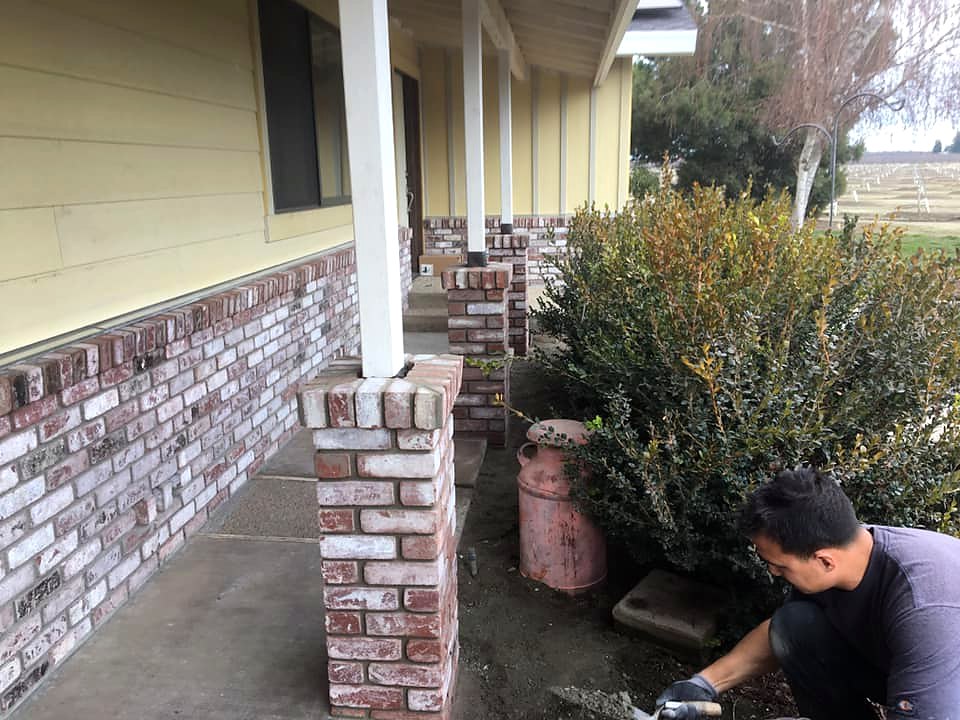
Brick porch columns and wainscot repair by Warrens Masonry Central Valley CA

Warning Signs Your Masonry Needs Attention

Mortar Joint Problems

Crumbling or recessed mortar joints are the most common masonry problem in homes in the area. UV exposure and thermal cycling break down mortar over time, creating gaps that allow water penetration. If you can remove mortar with a screwdriver or if joints are visibly recessed more than 1/4 inch, tuckpointing is needed.

Efflorescence - white mineral deposits on the masonry surface - signals water is moving through the wall. It is not structurally dangerous on its own, but indicates mortar or masonry failures that need to be identified and corrected.

Brick and Stone Problems

Spalling bricks - bricks with chipped, flaking, or broken face surfaces - indicate freeze-thaw damage or, in the area, prolonged moisture infiltration from failed mortar joints. Spalled bricks must be replaced, not just patched.

Stair-step cracks following mortar joints diagonally across a wall typically indicate foundation settlement or soil movement. These require structural assessment, not just cosmetic repair.

Structural Problems

Bulging or bowing walls indicate that the masonry has lost its structural integrity - often caused by inadequate reinforcement, soil pressure, or water damage to a retaining wall. These require urgent assessment and typically partial or full rebuilds.

Horizontal cracks in block walls, especially in retaining walls or basement walls, indicate bending failure from lateral soil pressure. This is a serious structural problem that should be assessed by a licensed masonry contractor promptly.

Chimney Problems

Missing or crumbling chimney cap allows water directly into the flue and mortar joints. Deteriorated chimney crown - the concrete cap around the flue - causes accelerating mortar joint failure. Spalling or missing bricks near the top of the chimney are commonly visible from the ground and indicate more significant deterioration above the roofline.

Common Questions

Masonry Repair FAQ for the area Property Owners

Warning signs include crumbling or recessed mortar joints (joints should be flush or slightly indented, not obviously hollow), spalling or cracked bricks, white efflorescence on the wall surface, moisture or water stains inside after rain, stair-step cracks in the mortar joints, bulging or leaning wall sections, and visible damage to the chimney. If you notice any of these, call us for a free assessment - the longer these problems go unaddressed, the more expensive the repair becomes.
Tuckpointing (also called repointing) is the process of removing deteriorated mortar from masonry joints to a minimum depth of 3/4 inch and replacing it with new mortar. It restores the wall's weatherproofing and structural bond between units. In this region, exterior brick walls typically need tuckpointing every 20-30 years due to UV exposure and temperature cycling. South and west-facing walls deteriorate faster than sheltered exposures.
Yes - color matching is one of our most requested repair capabilities. For mortar, we mix test batches with various pigment loadings and compare them to the existing mortar in both wet and dry states before beginning work. For brick replacement, we source matching brick from regional suppliers and brick salvage yards. Our goal is always for the repair to be invisible once weathered - you should not be able to tell where the old masonry ends and the new work begins.
Small repairs like a fireplace tuckpointing or a short wall section start around $300-$800. Whole-house tuckpointing on a typical brick home runs $1,500-$5,000 depending on condition and wall area. Chimney repairs run $500-$3,000 for repointing and crown repairs; partial or full chimney rebuilds range from $2,000-$8,000+. We provide free inspections and detailed written estimates for every repair project so you know the full cost before we start.
Masonry deterioration accelerates once water begins penetrating. Failed mortar joints let water in, which accelerates spalling of the masonry units themselves, corrodes embedded rebar, promotes mold growth in adjacent wall cavities, and can lead to structural weakening. In our area, wet winters create significant water infiltration pressure through failed joints. We recommend addressing masonry damage as soon as it is noticed - a $500 tuckpointing job today prevents a $5,000 rebuild in 5 years.
Yes, we repair and rebuild chimneys regularly throughout Northern California. For chimneys you are planning to use for wood burning, a Level 2 chimney inspection by a certified chimney sweep is typically recommended before any masonry repair to identify interior flue damage not visible from the exterior. For exterior-only masonry repair (repointing, crown repair, cap replacement), a visual inspection by our crew during the free estimate is sufficient to scope the work.

The Cost of Deferred Masonry Maintenance in the Central Valley

Understanding when to repair vs. wait - and what happens when repair gets delayed too long.

Small Repairs vs. Major Rebuilds

The difference between a $500 tuckpointing job and a $5,000 wall rebuild is almost always time. Mortar joints begin to fail after 20 to 30 years in local conditions - UV exposure breaks down the surface, and seasonal temperature cycling stresses the joints. In the early stages, this is a simple tuckpointing repair: grind out the failed mortar, repoint with new mortar matched to the existing color and profile, and the wall is good for another 25 to 30 years.

Left unaddressed, water infiltrates through the failed joints. In the first few years, you get efflorescence - white salt deposits on the surface that signal water movement through the masonry. After that, moisture reaches the brick face and begins freeze-thaw spalling. The bricks themselves start to break down. At this point, simple tuckpointing is no longer an option - spalled bricks must be replaced, and often the mortar joint failure has compromised sections of wall that now need to be rebuilt.

Our Repair vs. Replace Assessment

When we inspect a masonry structure, we give you a straight answer: what can be repaired cost-effectively, what should be replaced, and what can wait. We do not recommend unnecessary work, and we do not delay recommending necessary work to avoid an uncomfortable conversation. Thirty-five years in this business means we have seen the consequences of deferred maintenance across hundreds of properties in the area. We would rather have the honest conversation now than watch a client's wall fail in two years because we let them wait.

Historic Masonry in Modesto

Modesto's Historic Downtown district, the older neighborhoods of Turlock near the CSU campus, and the pre-war commercial buildings of Oakdale's downtown all have significant historic masonry that requires specialized repair knowledge.

Historic masonry repair is different from modern masonry repair in one critical way: the mortar. Pre-1940s brick construction used lime-based mortars that are significantly softer and more flexible than modern Portland cement mortars. If you repair historic brick with a modern Portland cement mortar that is harder than the brick itself, seasonal movement will cause the bricks to crack and spall rather than the mortar joints - which is exactly backwards from how masonry is supposed to work. The mortar is intended to be the sacrificial element that cracks and is periodically replaced, not the brick.

We assess original mortar composition before specifying any repair mortar mix for historic buildings. For the older properties in Modesto and Stockton's downtown cores, we source lime-based mortars that match the original specification and ensure the repair is compatible with the original construction. Our goal is always to protect the original masonry, not just make it look better temporarily.

Chimney Repair in the Central Valley

Local chimneys face a specific challenge: they are often neglected for decades because the climate is mild enough that fireplaces are only used occasionally. A chimney that is used rarely still experiences weather deterioration - rain infiltration through failed crowns, mortar joint deterioration from UV and temperature cycling, and wildlife nesting. By the time a homeowner discovers the chimney problem, it is often more extensive than it would have been with regular inspection. We recommend a visual inspection every 5 to 7 years for any masonry chimney, and immediate assessment if you notice crumbling mortar, missing bricks, or staining on the chimney exterior.
Need masonry repaired or restored?

Call Ronald Warren for a free inspection and estimate. Serving Modesto, Ceres, Turlock, Stockton, Oakdale, Tracy, Manteca, and all of Northern California.

(209) 204-8673
Request a Free Estimate Call Now