Home / Services / Retaining Wall Construction

Retaining Walls

Retaining Wall Construction in Modesto & Northern California

Engineered masonry retaining walls that hold strong for decades. CMU block, natural stone, and segmental systems designed for the area soil conditions and built to code.

Get a Free Estimate

Expert Retaining Wall Contractor for Modesto & Northern California

A properly engineered retaining wall does critical structural work - holding back thousands of pounds of soil, managing drainage, preventing erosion, and creating usable level areas on sloped properties. When built correctly, it also adds significant beauty and property value. When built incorrectly, it is a future liability.

Warrens Masonry has been building retaining walls in Stanislaus County, San Joaquin County, and throughout Northern California for over 35 years. We understand the region's expansive clay soils, high groundwater tables in low-lying areas, and the drainage challenges that come with winter rainy season followed by dry summers. These conditions demand a mason who knows how to design drainage systems, size footings correctly, and reinforce walls for long-term stability.

We build retaining walls across Modesto, Turlock, Stockton, Oakdale, Tracy, Manteca, and throughout Stanislaus and San Joaquin Counties - from the landscape-scale garden planter to the engineered multi-tiered hillside structure. Every wall is designed and built to handle the specific load it needs to carry, with the drainage capacity to manage hydrostatic pressure through our wet winters. For walls requiring permits, we work with licensed structural engineers and handle all building department submissions.

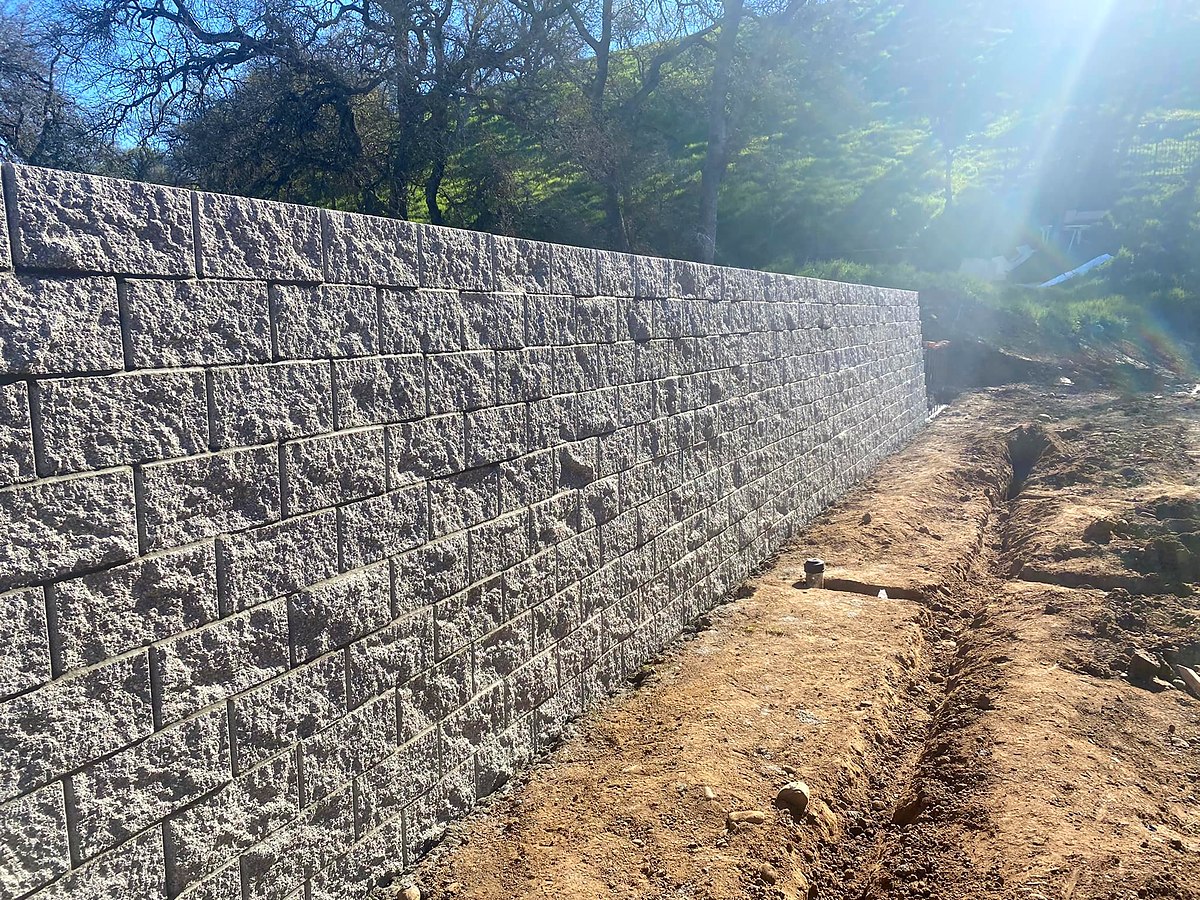
Long segmental concrete block retaining wall on hillside by Warrens Masonry

Types of Retaining Walls We Build

  • CMU block retaining walls with steel rebar reinforcement
  • Natural stone retaining walls for landscape applications
  • Segmental retaining wall block systems (Allan Block, Versa-Lok)
  • Brick-faced retaining walls matched to existing home masonry
  • Terraced retaining wall systems for steep slopes
  • Garden bed and raised planter walls
  • Driveway and parking lot retaining walls at grade changes
  • Commercial and industrial retaining structures
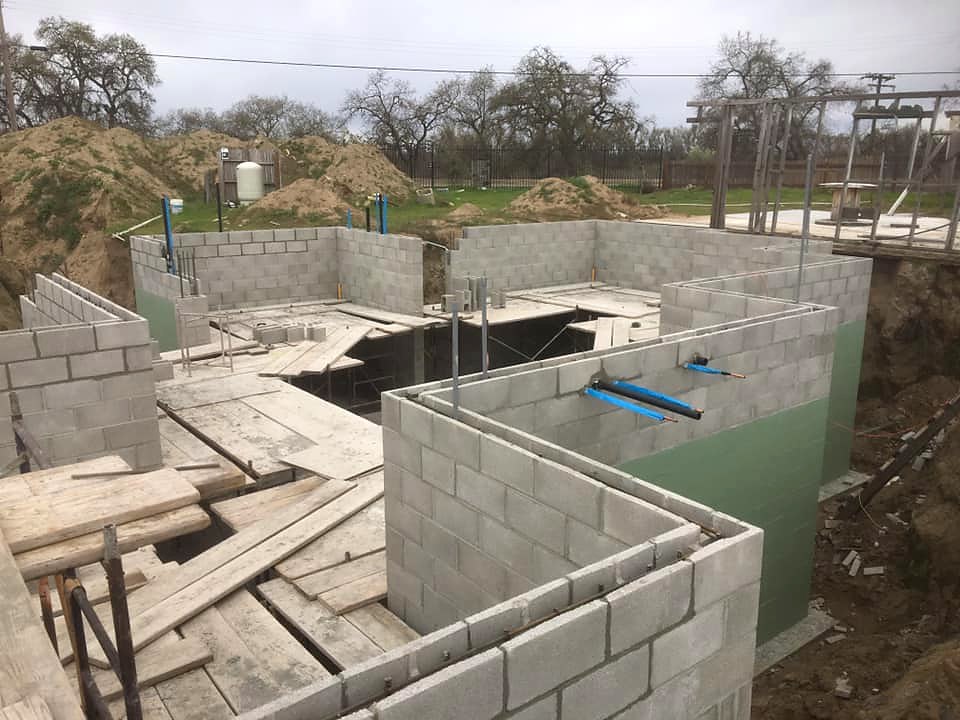
Large CMU block retaining wall construction by Warrens Masonry Central Valley CA

The Critical Role of Drainage in Retaining Walls

Why Drainage is the Most Important Factor

Hydrostatic pressure - the force of water-saturated soil pushing against a wall - is the single greatest cause of retaining wall failures in the area. After winter rains, clay soils absorb and hold enormous amounts of water, creating tremendous lateral pressure. A wall without proper drainage is essentially fighting against its own design with every rain event.

Every retaining wall we build includes a complete drainage system. For small landscape walls, this typically means drainage gravel backfill and weep holes. For larger structural walls, we install perforated drain pipe in a gravel-filled trench at the base of the wall, tied into daylight or a drain system.

Our Drainage Standard

Drainage gravel backfill: We backfill immediately behind the wall with free-draining crushed aggregate, not the native clay soil that was excavated.

Perforated drain pipe: On walls over 3 feet, we install perforated 4" drain pipe at the base of the gravel backfill zone, sloped to drain to a daylight location.

Weep holes: Through-wall weep holes at regular intervals allow any pressure that does build up to escape rather than pushing against the wall.

Waterproofing: The back face of structural CMU walls is typically waterproofed with a bituminous coating before backfilling to further protect the masonry from water infiltration.

Common Questions

Retaining Wall FAQ for the area Property Owners

Garden and landscape retaining walls under 3 feet typically run $20-$35 per square foot of wall face. Mid-range CMU retaining walls 3-6 feet tall run $35-$55 per square foot. Walls over 4 feet requiring engineer-stamped plans can run $50-$75+ per square foot depending on complexity. Retaining walls are priced by the square foot of exposed wall face, not linear foot, because taller walls require proportionally more materials and reinforcement. We provide free, detailed estimates.
Yes, in most California jurisdictions. Retaining walls over 4 feet tall (measured from the bottom of the footing to the top of the wall) require a building permit and engineer-stamped plans in virtually all Central Valley cities and counties. Some jurisdictions have lower thresholds. We are fully familiar with permit requirements in Modesto, Ceres, Turlock, Stockton, Oakdale, Tracy, and Manteca and handle all permit submittals on your behalf.
CMU block with rebar reinforcement is the most cost-effective and structurally proven material for structural retaining walls in our region. It is strong, fast to install, and handles the clay-heavy soils of Northern California well when properly drained. Natural stone works beautifully for landscape walls and adds tremendous visual appeal. Segmental block systems work well for walls under 4 feet where engineered plans are not required. We recommend the right material during your free estimate based on height, load, and aesthetic preferences.
Drainage is the single most important factor in retaining wall longevity. Hydrostatic pressure from water-saturated clay soil is the number one cause of wall failures in the area. Every retaining wall we build includes drainage gravel backfill, weep holes, and perforated drain pipe on walls over 3 feet. We never backfill directly against a structural wall with native clay soil. Proper drainage is not optional - it is the difference between a wall that lasts 50 years and one that fails in 10.
A properly engineered and built masonry retaining wall with adequate drainage, properly sized footings below the frost line, and appropriate rebar reinforcement can last 40-75+ years with minimal maintenance. The key is drainage. We have inspected walls we built 30 years ago that still look and perform as good as the day they were finished - because they were built with proper drainage from the start.
Sometimes, depending on the extent of movement and the underlying cause. We assess failing walls during our free estimate to determine whether repair or replacement is the more cost-effective solution. In many cases, a wall that is beginning to bow or lean can be stabilized if addressed early. Walls that have moved significantly or where drainage failures have undermined the footing typically need to be replaced with a properly drained system. We give you an honest assessment.

Retaining Wall Engineering, Permits & Inspection in Stanislaus County

Understanding the permit and engineering requirements before you build saves time, money, and legal exposure.

When a Permit Is Required

In virtually all Central Valley jurisdictions, retaining walls over 4 feet tall measured from the bottom of the footing to the top of the wall require a building permit and engineer-stamped plans. Some cities apply this threshold at 3 feet. In Modesto, Ceres, Turlock, Stockton, Oakdale, Tracy, and Manteca, we have pulled retaining wall permits many times and know each city's specific requirements and turnaround times.

Walls that are close to property lines, within HOA-governed communities, or adjacent to public rights-of-way may have additional requirements. We advise on all of this during our free estimate visit. You should never build a retaining wall over 3 feet without first confirming permit requirements - an unpermitted wall that fails and damages a neighbor's property is a significant legal and financial exposure.

Working with Structural Engineers

For walls requiring engineer-stamped plans, we work with licensed structural engineers who are familiar with Stanislaus County and San Joaquin County building departments. The engineer specifies the reinforcement schedule, footing dimensions, and drainage requirements based on the actual soil conditions and wall geometry. We build exactly to the stamped plans and coordinate inspections at the required intervals.

Central Valley Soil Conditions

The San Joaquin Valley's heavy clay soils are among the most expansive in California. Clay soils absorb water and swell during winter rains, then shrink and crack during the dry summer months. This seasonal movement creates tremendous lateral pressure on retaining walls and requires footings that extend below the active soil zone.

Most retaining wall failures in our region have two root causes: inadequate drainage and undersized footings. Drainage fails because contractors backfill directly against the wall with the same clay soil they excavated - soil that holds water instead of draining it. Footings fail because contractors underestimate the soil expansion forces that develop through a wet Central Valley winter.

After 35 years of building retaining walls in this specific soil environment, we have developed construction standards that go beyond code minimums because we have seen what happens when contractors just barely meet them. Our retaining walls are over-engineered in the best sense of the word.

Signs Your Existing Wall Needs Attention

Horizontal cracks in a block retaining wall are a serious warning sign - this pattern indicates bending failure from lateral soil pressure and warrants immediate assessment. Bowing or leaning walls should be evaluated before the next rainy season, not after. Drainage failures (no visible weep holes, water pooling behind the wall) can be corrected before they cause structural failure if addressed early. Call (209) 204-8673 for a free inspection if your wall shows any of these signs.
Retaining Wall Projects Throughout the Central Valley

Hillside and Slope Properties

Properties along the Tuolumne River bluffs in Modesto, the Stanislaus River corridor near Oakdale, and hillside properties throughout the foothills present real retaining wall engineering challenges. We design terraced wall systems that manage drainage across multiple levels, integrate seamlessly with landscape plans, and create usable flat areas from steep slopes.

Residential Grade Changes

Grade changes between neighboring properties in established subdivisions in Turlock, Tracy, and Manteca often create erosion problems and drainage conflicts that a properly designed retaining wall solves permanently. We assess neighboring property drainage during our estimate and design walls that manage water flow for both properties, not just the client's side of the line.

Need a retaining wall built or repaired?

Call Ronald Warren for a free on-site estimate. Serving Modesto, Ceres, Turlock, Stockton, Oakdale, Tracy, Manteca, and all of Northern California.

(209) 204-8673
Request a Free Estimate Call Now